By the Pawy Editorial Team · Last updated August 2026. Educational information only — not veterinary or behavioural advice.
A bored dog is usually telling you something specific: the day has too little to do in it, and they've found their own job. Chewing skirting boards, barking at nothing, digging the lawn, following you room to room, or the 8pm zoomies are all common signs. The good news is that boredom is one of the easier problems to change, because the fix costs almost nothing and takes about two minutes a day.
The signs owners usually miss
Obvious boredom looks like destruction. Less obvious boredom looks like:
- Following you constantly — you are the most interesting thing in the house.
- Excessive licking of furniture, floors or themselves — self-generated stimulation.
- Barking at ordinary sounds — the day has nothing else in it, so everything is an event.
- Sleeping heavily all day, then wired at night — the schedule has inverted.
- Emptying the toy box without playing — novelty-seeking rather than play.
- Rushing the door — the only interesting thing that happens is arrivals.
An important caution: several of these overlap with pain, illness and anxiety. Sudden onset, escalation, or any behaviour paired with a change in eating, drinking, toileting or movement warrants a veterinary conversation before you assume boredom. Persistent distress when alone in particular is not boredom, and it needs professional help early.
Why a walk often isn't enough
Most owners respond to boredom with more physical exercise. It helps, but it's an incomplete answer — and for high-energy dogs it can backfire, because you build fitness faster than you tire them.
What's usually missing is mental work: searching, sniffing, problem-solving, working for food. A dog who eats from a bowl in thirty seconds has had the single most engaging part of their day handed to them for free, twice.
The two-minute fix
Stop serving meals in a bowl. Route the same food through an activity instead.
- Scatter feeding. Free. Toss dry food across a clean floor, a towel or the lawn. A thirty-second meal becomes five to ten minutes of foraging.
- A slow feeder. Zero setup, zero learning curve — see the Mindful Meal Slow Feeder.
- A snuffle mat. Hides food in fabric folds for nose work — the Sniff & Seek mat.
- A rolling feeder. Adds movement, good for the morning — the Workday Wobble Feeder.
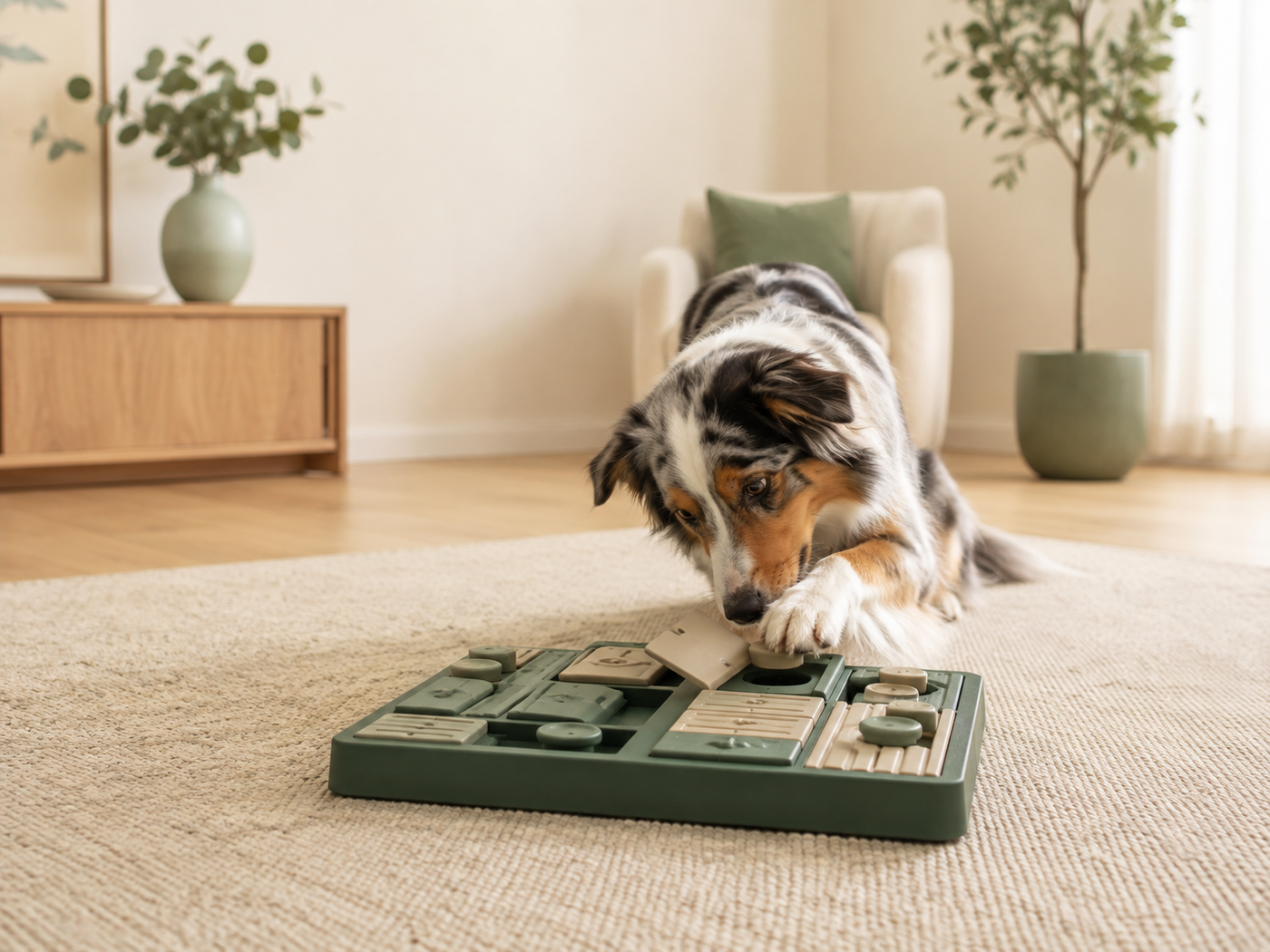
- A puzzle. The biggest mental workout, best once the simpler options are easy — the Quack & Snack or, for experienced dogs, the Clever Paws board.
You do not need all five. One activity, used consistently, changes more than five products used once.
Why rotation matters more than quantity
Dogs habituate. The puzzle that fascinated them in week one is furniture by week three if it appears every single day. Rotating activity types — roll, sniff, lick, puzzle, slow feed — keeps novelty without buying anything new. Our rotation guide and seven-day routine lay this out.
The sleep factor almost everyone underestimates
Adult dogs sleep a great deal, and puppies far more. A dog who cannot settle in the evening is very often under-rested rather than under-exercised — over-tiredness looks almost identical to boredom, and adding more activity makes it worse. If your dog is frantic at night, try protecting daytime rest before adding anything else.
A realistic week
Morning: breakfast through a rolling feeder or slow feeder. Midday: a snuffle mat if someone is home. Afternoon: a puzzle during the difficult hour. Evening: a lick mat to wind down. Full detail in enrichment for busy owners.
When it isn't boredom
Seek help from a veterinarian or a qualified reward-based behaviour professional if you see aggression, severe fear, escalating distress when alone, sudden behavioural change, repetitive behaviours that are hard to interrupt, or anything paired with physical symptoms. Enrichment supports an ordinary dog's routine — it is not a treatment.
Frequently asked questions
How quickly will I see a difference?
Many owners notice calmer evenings within a week or two of consistent food-based enrichment. Consistency matters far more than intensity.
Is my dog bored or anxious?
Boredom generally improves when the day gets more interesting. Anxiety usually doesn't, and often centres on specific triggers such as being left alone or particular noises. If you're unsure, ask your vet — the two need different approaches.
Can I do this without buying anything?
Yes. Scatter feeding, a towel rolled with kibble inside, and hiding food around a room are all genuine enrichment. Products make it tidier and more repeatable, not more valid.
My dog destroys everything I give them.
Feeding products are not chew toys. Supervise, remove damaged items immediately, and choose products suited to your dog's size and chewing style. A dog who consistently destroys rather than solves needs a different category of product and, if it escalates, professional input.
Does this work for senior dogs?
Very well. Sniffing and licking activities are low-impact and stay satisfying into old age. Choose lower-effort options and keep sessions relaxed.
Not sure where to start? Find My Dog's Level recommends a starting point in about a minute.