By the Pawy Editorial Team · Last updated August 2026. Educational information only — not veterinary advice.
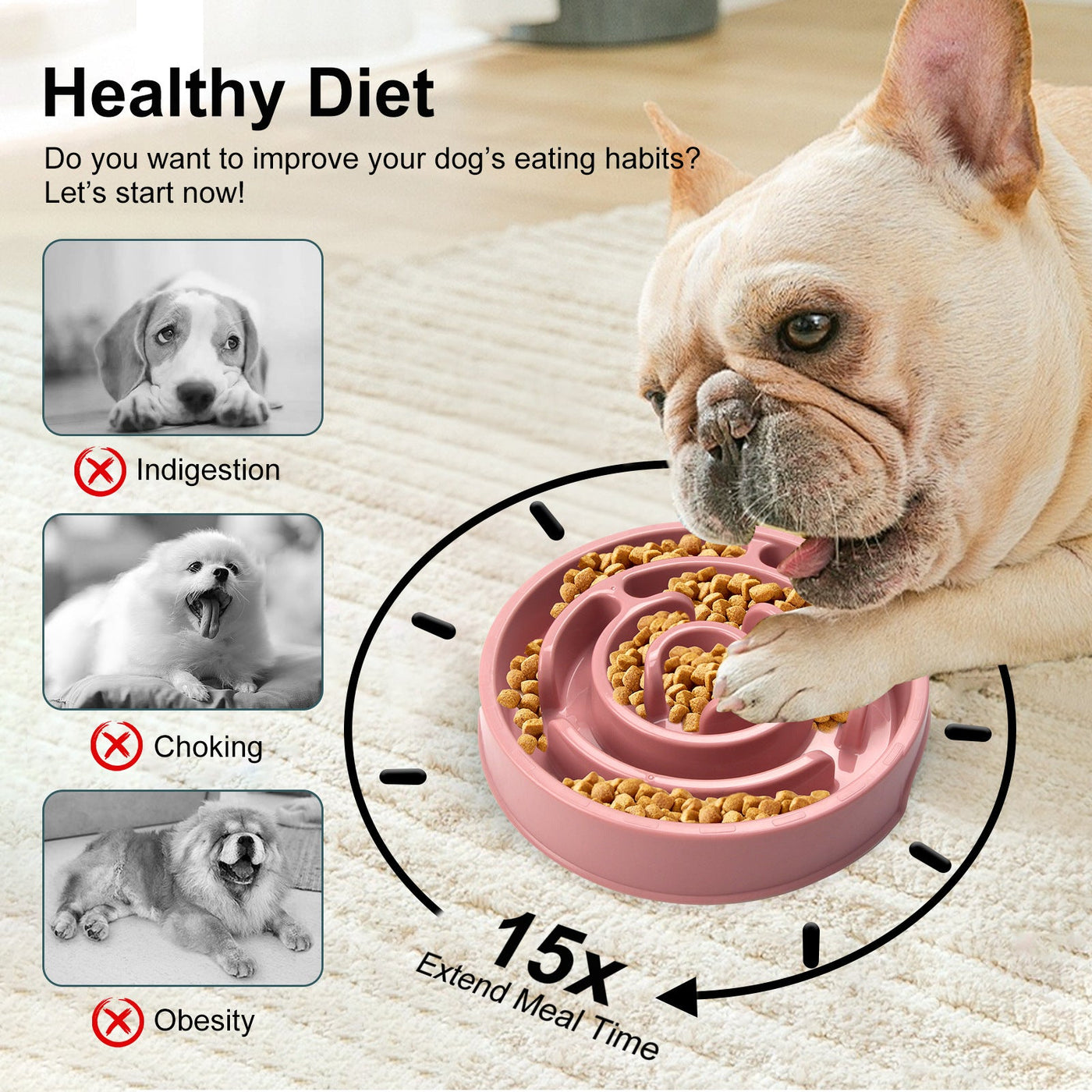
The quickest fix is physical, not behavioural: change the shape of the bowl. A slow feeder spreads food across ridges so it physically cannot be gulped, which turns a thirty-second meal into five or ten minutes without you teaching anything. For most fast eaters that single change does the bulk of the work.
But first, one thing worth ruling out.
When fast eating is a veterinary matter
Fast eating is usually just habit. Occasionally it isn't. Speak with your veterinarian if you notice:
- Gagging, retching or vomiting food shortly after meals
- A sudden change in eating speed or appetite in an adult dog
- Distress, restlessness or a swollen or hard abdomen after eating
- Guarding, stiffening or growling around food
- Weight loss despite eating well
Bloat is a genuine emergency in deep-chested breeds, and it needs immediate veterinary attention rather than a change of bowl. If something feels wrong after a meal, call your vet — don't wait it out.
Why dogs eat fast in the first place
Competition is the most common reason: dogs from multi-dog homes or litters often learn early that slow eating means less food. Others simply find the food very rewarding and have never had a reason to slow down. Some are on a feeding schedule that leaves them genuinely hungry between meals.
Notably, none of these are disobedience — which is why telling a dog to slow down achieves nothing. You change the setup, not the dog.
Five approaches that work
1. A slow feeder bowl
The simplest and most reliable. Ridges force your dog to work around a pattern instead of clearing an open bowl. Zero setup, zero training, works from the first meal. See the Mindful Meal Slow Feeder.
Choosing the pattern: wider, shallower designs suit beginners, short-muzzled breeds and older dogs. Tighter mazes suit dogs who clear an easy pattern quickly. Starting too difficult can cause frustration, so step up rather than starting at the hardest.
2. Scatter feeding
Free, and effective. Toss dry food across a clean floor, a towel, or the lawn. Your dog has to find each piece, which slows the meal and adds sniffing work. The main downside is mess — a feeding mat contains it.
3. A snuffle mat
Food hidden in fabric folds, found by nose. Slower than scatter feeding and considerably more absorbing. See the Sniff & Seek mat.
4. A rolling or puzzle feeder
Food is released gradually as your dog works the toy. This slows eating and adds mental work — useful for dogs who are both fast and bored. See the Workday Wobble Feeder or browse puzzle feeders.
5. Smaller, more frequent meals
Splitting the daily ration across three or four servings reduces the urgency at each one. Check the total with your vet, especially for puppies and dogs on managed diets.
What not to do
- Don't put an object in the bowl as a DIY obstacle. Balls and stones get swallowed, and it's a genuine emergency risk.
- Don't take the bowl away mid-meal to slow them down. That teaches your dog that people approaching food is bad news — which is how resource guarding starts.
- Don't tell them off for eating fast. It isn't a choice they're making.
- Don't feed in a competitive space. In multi-dog homes, feed separately, in different rooms if needed.
Multi-dog households
If one dog eats fast because another might take their food, the bowl isn't the problem — the setup is. Feed in separate rooms or behind a gate, and let each dog finish without an audience. Slow feeders help, but only once the competition is removed.
How long should a meal take?
There's no correct number, and any guide that gives you one is guessing about your dog. What matters is the direction: if a meal that took thirty seconds now takes five minutes, that's a meaningful change. Most owners find a slow feeder produces that on the first try.
Safety
- Select products appropriate for your dog's size, age and behaviour.
- Supervise initial use and inspect regularly; replace anything cracked or damaged.
- Never use household objects as improvised obstacles.
- Count enrichment food as part of the daily ration.
- Persistent gagging, vomiting or distress after meals is a veterinary matter.
Frequently asked questions
Do slow feeder bowls actually work?
For most dogs, yes, and immediately — the mechanism is physical rather than behavioural. A determined dog will get faster at any given pattern over time, which is when you step up the difficulty.
Can I use wet food in a slow feeder?
Yes, in shallower patterns — spread thin. Tight mazes are difficult to clean with wet food and can frustrate some dogs.
Are slow feeders suitable for puppies?
Yes, with a beginner-friendly pattern and supervision. Follow your vet's guidance on feeding frequency and portions.
Is fast eating dangerous?
It can contribute to gagging, vomiting and discomfort, and in deep-chested breeds there are recognised concerns around bloat. If you're worried about your individual dog, ask your vet — that's a question worth asking directly.
My dog still eats fast with a slow feeder.
Try a tighter pattern, or switch approach entirely to a snuffle mat or scatter feeding, which slow things down through searching rather than obstruction.
Browse Slow Mealtimes, or find a starting point with Find My Dog's Level.