By the Pawy Editorial Team · Last updated August 2026. Educational information only — not veterinary or behavioural advice.
Clean feeding products after every use, and inspect them at the same time. Hard products — slow feeders, rolling toys, puzzle boards — rinse with warm water and mild detergent. Fabric products like snuffle mats need shaking out after each session and washing periodically per their care label. The inspection matters as much as the wash: a cracked feeder or a fraying mat is a swallowing risk, not a cosmetic problem.
Why it matters more than it sounds
Enrichment products hold food, often in grooves and folds designed specifically to make food hard to reach. Those same features make them hard to clean. Residue in a puzzle compartment or a lick mat groove goes rancid faster than most owners expect, especially through an Australian summer.
By product type
Slow feeder bowls
Rinse with warm water and mild detergent after every meal. Get into the ridges with a brush — the base of each ridge is where residue collects. Dry thoroughly before the next meal.
Check for cracks and sharp edges each time. A cracked bowl harbours bacteria in places you cannot reach, and should be replaced. See the Mindful Meal Slow Feeder care guidance.
Lick mats
Wash after every single use — these hold soft food in fine texture, which is the hardest residue to shift. Warm water, mild detergent, and a soft brush across the grain. Dry fully before storing; a damp mat stored flat will not stay pleasant.
Replace when the surface tears. See the Settle & Lick Activity Mat.
Snuffle mats
Shake out loose food after every session — this is the step most owners skip, and it's the one that keeps a mat usable. Wash regularly following the care label supplied with the product, and dry thoroughly and completely before storing rolled.
Retire a mat once the fabric tears or frays, since loose material is a swallowing risk. See the Sniff & Seek mat.
Rolling and puzzle feeders
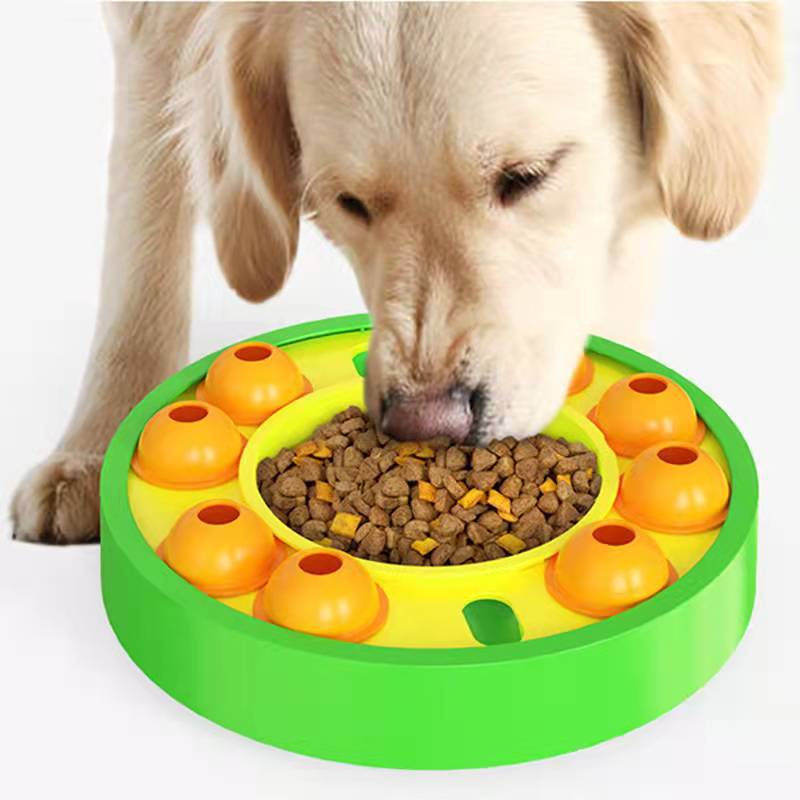
Empty, rinse and dry after each session. Pay attention to internal chambers, which trap crumbs where you cannot see them.
Check the moving parts weekly — rotating compartments, sliding covers and hinges. A part that has loosened is the first sign a product is nearing the end of its life. See the Clever Paws Puzzle Board and Workday Wobble Feeder.
Feeding mats
Wipe with warm water and mild detergent after use, dry, then store. Don't roll a damp mat away. See the Mess-Free Feeding Mat.
Always follow the product's own instructions
Dishwasher and freezer suitability vary between products, and between materials that look identical. The care label supplied with your specific product overrides any general advice — including this article. When a product doesn't state that it's dishwasher safe, assume it isn't.
The weekly inspection
Once a week, check every product your dog uses:
- Cracks or splits in hard plastic — replace
- Sharp edges where material has worn — replace
- Chew damage on any surface — replace, and reconsider whether that product suits your dog
- Fraying or holes in fabric — replace
- Loose or wobbling moving parts — replace
- Persistent smell after washing — replace
- Discolouration in grooves that won't shift — replace
Retiring a product early costs a few dollars. An emergency veterinary visit for a swallowed fragment costs considerably more, and is far worse for your dog.
Practical tips
- Clean immediately. Residue that dries on takes four times as long to remove.
- Keep a dedicated brush. A small bottle brush handles ridges and chambers better than a sponge.
- Own two of anything you use daily so one can dry properly while the other is in use.
- Avoid harsh chemicals and bleach unless the manufacturer specifically says otherwise — residue ends up in your dog's food.
- Dry completely. Most smell problems are moisture problems.
Safety
- Follow each product's supplied cleaning instructions.
- Inspect before every use, not just weekly.
- Remove damaged products immediately — don't wait for a convenient moment.
- Supervise use, and never leave a dog with a product you haven't inspected.
Frequently asked questions
Are enrichment products dishwasher safe?
It depends entirely on the product and material. Check the care instructions supplied with yours. If it doesn't say dishwasher safe, hand wash.
How often should I replace them?
There's no fixed schedule — replace on condition, not on age. A gently used mat may last years; a mat a determined chewer got hold of may last a week.
Can I use vinegar or bicarb soda?
Many owners do for stubborn smells, followed by a thorough rinse. Check your product's instructions first, and always rinse completely.
My snuffle mat smells even after washing.
Usually incomplete drying or food trapped deep in the folds. Wash again, shake vigorously, and dry fully flat. If it persists, replace it.
Do I really need to clean after every use?
For anything holding soft or wet food, yes. Dry-food-only products can occasionally stretch to every second session, but daily is the safer habit — particularly in warm weather.
More safety guidance on our Product Safety page.