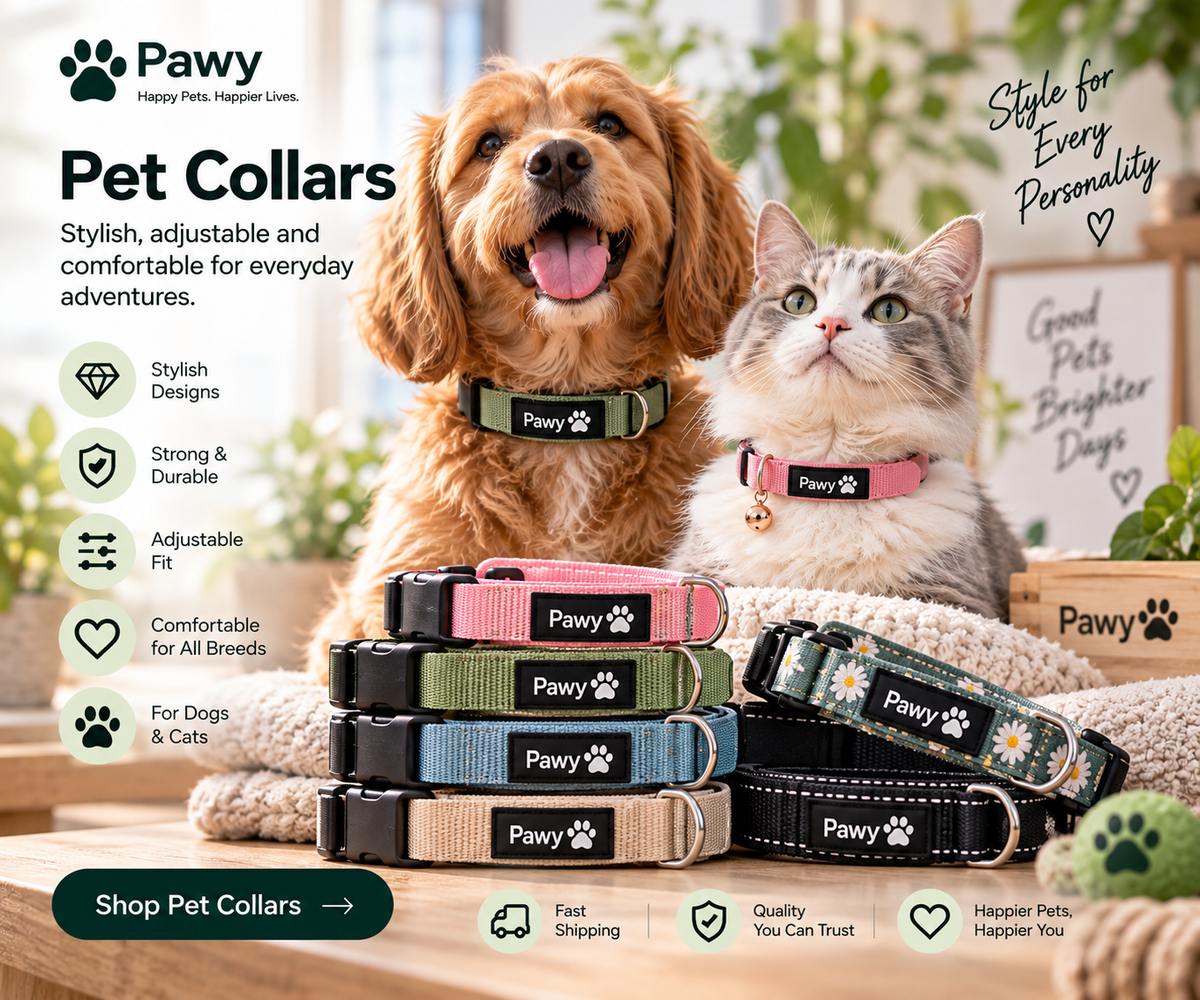
A collar looks like the simplest piece of dog gear you'll ever buy, right up until you're standing in front of a wall of them trying to work out why one costs three times as much as another. Material, width and hardware all matter more than they look like they should.
Material: what actually holds up
Nylon webbing is the default for a reason — it's light, dries fast after a wet walk, and comes in enough widths to suit almost any dog. Leather ages well and softens with use, but it needs occasional conditioning and doesn't love being left wet. For a dog that swims or gets muddy often, a nylon or biothane-style collar will simply cope better day to day.
Width should match your dog's size, not your style preference
A collar that's too narrow for a large, strong dog concentrates pressure into a small area of the neck if they pull or lunge. As a rough guide, small breeds do well with 10–15mm webbing, medium dogs with 20–25mm, and large or giant breeds with 25mm or wider. If your dog is a puller, this matters even more — pair a wider collar with a properly fitted harness rather than relying on the collar alone for leash pressure.
Reflective elements are worth paying for
If you ever walk at dawn, dusk, or after dark — even just in winter when the sun sets at 5pm — reflective stitching or a reflective overlay is one of the cheapest safety upgrades available. Look for reflective thread woven through the webbing rather than a printed pattern, since printed reflective finishes tend to wear off with repeated washing.
Buckle type: side-release vs. metal
Side-release plastic buckles are quick to fasten and fine for the vast majority of dogs. If you have a large, powerful dog, or one that's ever managed to pop a plastic buckle under pressure, a metal roller buckle is a sturdier option, though it takes slightly longer to fasten.
The two-finger fit check
However good the collar, fit is what makes it safe. You should be able to fit two fingers flat between the collar and your dog's neck — snug enough that it won't slip over their head backing away, loose enough that it isn't restricting movement or breathing. Recheck the fit every few months for adult dogs and far more often for a growing puppy.
When a collar isn't enough on its own
A collar is great for holding ID tags and for dogs that walk politely on lead, but it isn't always the right point of leash attachment for a strong puller or a dog still learning loose-leash walking. In those cases, a well-fitted harness distributes pressure across the chest and shoulders instead of the neck. Browse our full dog essentials range to compare collars, harnesses and leashes side by side, or see what's newly added this month.